In this guide
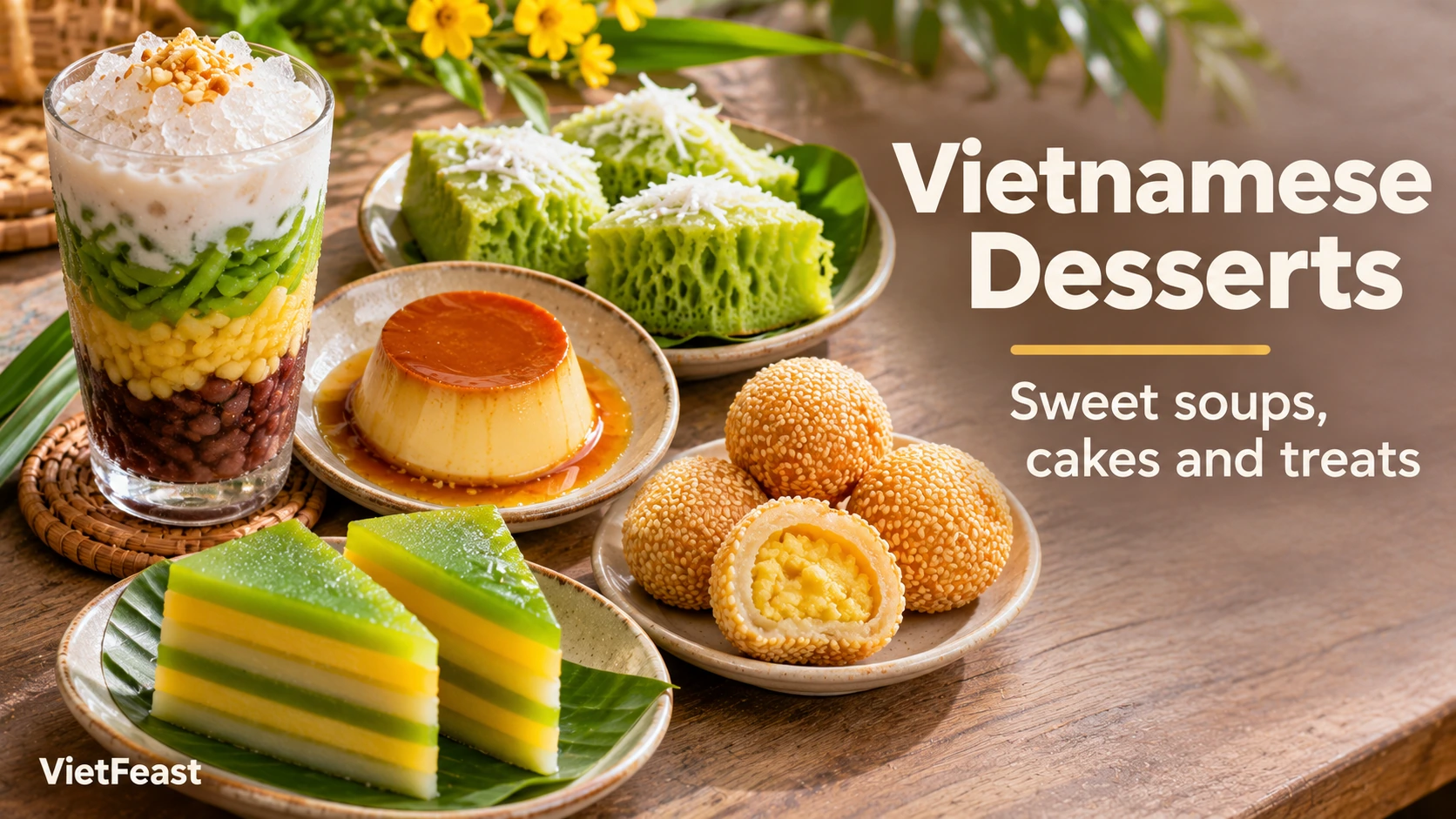
Vietnamese desserts are built around coconut milk, pandan, mung beans, glutinous rice and tapioca, and texture matters as much as sweetness. The best-known is chè, a family of sweet soups and puddings. Bánh flan (caramel custard), steamed cakes like bánh da lợn and bánh bò, and fried sesame balls (bánh cam) are close behind.
Key takeaways
- Chè is the big category: sweet soups and puddings served warm or over ice.
- Coconut and pandan are everywhere. Pandan gives many sweets their green color and grassy-vanilla aroma.
- Texture is the point: chewy, jiggly, creamy and crunchy, often in one bowl.
- Many are rice- or tapioca-based, but recipes vary, so ask about ingredients if you have allergies or dietary needs.
- Look beyond restaurants. Vietnamese bakeries, delis and dessert shops often have the widest selection.
If you’re exploring Vietnamese food dessert by dessert, this guide is your map. Each section gives a quick overview and links to a deeper guide where we have one. For the cuisine as a whole, start with our Vietnamese food guide.
What makes Vietnamese desserts different?
Many Vietnamese sweets are lightly sweet and built on ingredients that also show up in savory cooking, such as rice, beans and coconut. Instead of butter and wheat flour, you’ll often find coconut milk, rice flour, glutinous rice flour and tapioca starch. That gives them their signature textures: chewy cakes, silky jellies and creamy puddings. Many are eaten as an afternoon snack or a street-side treat as much as after a meal.
Types of Vietnamese desserts
Chè: sweet soups and puddings
Chè (pronounced roughly “cheh”) covers dozens of desserts made from beans, jellies, fruit, tapioca or glutinous rice, usually finished with coconut milk and served warm or over crushed ice. A few you’ll often see:
- Chè ba màu (three-color dessert): layers of beans, mung bean paste and green pandan jelly with coconut milk and ice.
- Chè chuối (banana chè): banana and tapioca pearls in warm coconut milk.
- Chè trôi nước: glutinous rice balls filled with mung bean, in ginger syrup.
- Chè đậu xanh: a simple mung bean sweet soup.
Custards and jellies
- Bánh flan: a caramel custard similar to crème caramel, sometimes served with crushed ice or a splash of coffee.
- Sương sáo (grass jelly): a dark, slightly herbal jelly, often added to chè or drinks.
- Tàu hũ nước đường: soft silken tofu in warm ginger syrup.
Steamed and baked cakes
- Bánh da lợn (steamed layer cake): chewy layers made with tapioca starch and coconut milk, often alternating pandan and mung bean.
- Bánh bò (honeycomb cake): a spongy rice-flour cake. The baked pandan version, bánh bò nướng, has a honeycomb-like interior.
- Bánh chuối nướng (baked banana cake): banana baked with coconut milk into a dense, caramelized cake.
- Bánh khoai mì nướng (baked cassava cake): grated cassava and coconut milk baked until golden and chewy.
Fried treats
- Bánh cam (sesame balls): fried glutinous rice balls coated in sesame seeds and filled with sweet mung bean.
Sweet sticky rice
- Xôi ngọt: sweet versions of xôi (sticky rice), for example with mung bean, coconut or pandan. Xôi can also be savory, so check which kind you’re ordering.
Drinks that double as dessert
- Cà phê sữa đá: strong coffee with sweetened condensed milk over ice. See our Vietnamese iced coffee guide.
- Nước mía (sugar cane juice): freshly pressed and often served with a squeeze of citrus. Find it on our sugar cane juice page.
- Sinh tố: Vietnamese-style fruit smoothies, often blended with condensed milk.
Vietnamese desserts at a glance
| Dessert | Type | Key ingredients | Texture | Served |
|---|---|---|---|---|
| Chè ba màu | Chè | Beans, mung bean, pandan jelly, coconut milk | Creamy, chewy | Cold, over ice |
| Chè chuối | Chè | Banana, tapioca pearls, coconut milk | Silky, chewy | Warm |
| Chè trôi nước | Chè | Glutinous rice, mung bean, ginger syrup | Soft, chewy | Warm |
| Bánh flan | Custard | Eggs, milk, caramel | Smooth | Chilled |
| Sương sáo | Jelly | Grass jelly | Jiggly | Cold, in drinks or chè |
| Tàu hũ nước đường | Tofu dessert | Silken tofu, ginger syrup | Very soft | Warm |
| Bánh da lợn | Steamed cake | Tapioca starch, coconut milk, pandan, mung bean | Chewy, layered | Room temperature |
| Bánh bò | Steamed or baked cake | Rice flour, coconut milk | Spongy | Room temperature |
| Bánh chuối nướng | Baked cake | Banana, coconut milk | Dense, moist | Warm or room temperature |
| Bánh khoai mì nướng | Baked cake | Cassava, coconut milk | Chewy | Room temperature |
| Bánh cam | Fried | Glutinous rice, sesame, mung bean | Crisp outside, chewy inside | Fresh, warm |
Common ingredients in Vietnamese desserts
Where to find Vietnamese desserts
Some Vietnamese restaurants have a short dessert menu, often chè, flan or coffee. For more variety, look for Vietnamese bakeries and delis, which often sell cakes and chè in grab-and-go cups, and dedicated dessert or chè shops in larger Vietnamese communities. Browse Vietnamese restaurants by state and city to find spots near you, and check each listing’s menu or call ahead to see what’s available.
Ordering for the first time? Ask what’s freshest that day, and if you have allergies, ask about coconut, peanuts, sesame, eggs and dairy, since recipes vary by shop. Our 12 best Vietnamese dishes list is a good place to start for mains.
Frequently asked questions
What is the best-known Vietnamese dessert?
Chè is the best-known category: a family of sweet soups and puddings made with beans, jellies, fruit, tapioca or glutinous rice and coconut milk. Bánh flan, a caramel custard, is also widely available.
Are Vietnamese desserts very sweet?
Many are lightly sweet, with a focus on texture and ingredients like coconut and beans, but sweetness varies by dish and shop. At some chè shops you can ask for less sugar.
What is pandan and why are so many Vietnamese desserts green?
Pandan is a tropical leaf with a grassy, vanilla-like aroma. Its juice or extract flavors many Vietnamese sweets and gives them a green color. Some commercial versions also use added coloring.
Are Vietnamese desserts gluten-free?
Many are made from rice, glutinous rice, tapioca and beans, which don’t naturally contain gluten. Some recipes use wheat flour, though, and cross-contact is possible, so always ask the restaurant or bakery if you need to avoid gluten.
Are Vietnamese desserts dairy-free?
Many rely on coconut milk instead of dairy, but not all. Bánh flan is made with eggs and milk, and many drinks use sweetened condensed milk. Ask about ingredients if you avoid dairy.
Where can I buy Vietnamese desserts?
Try Vietnamese bakeries, delis and dessert shops, which often sell cakes and chè to go. Some Vietnamese restaurants and Asian grocery stores also carry them.
Got a sweet tooth?
Find Vietnamese restaurants and bakeries near you.