In this guide
Bánh canh is a Vietnamese noodle soup made with thick, chewy noodles from tapioca flour or a rice-and-tapioca blend. They’re often compared to Japanese udon. Popular versions include bánh canh cua (crab, in a thick, rich broth), bánh canh giò heo (pork hock in a clear pork broth) and bánh canh cá lóc (snakehead fish). At home you can make it with fresh or packaged bánh canh noodles in under 2 hours.
Key takeaways
- The noodles make it: thick, slippery and chewy, thanks to tapioca.
- Often called “Vietnamese udon” in English because of how the noodles look.
- Many styles: crab, pork hock, fish, fish cake, and a dry Trảng Bàng version.
- The broth thickens slightly from the noodle starch.
- Packaged noodles are easy to find at Asian grocery stores.
Bánh canh is comfort in a bowl: chewy noodles in a savory broth that’s often a little thick. This guide covers what bánh canh is, the main styles and a Vietnamese banh canh recipe (bánh canh giò heo) you can make at home. For other noodle soups, see our Vietnamese noodle soups guide.
What is bánh canh?
Bánh refers to the noodle cake or dough and canh means soup. The noodles are made from tapioca flour or a mixture of rice and tapioca flour, cut thick and round or slightly square. They release starch as they cook, which gives many bánh canh broths a silky body.
Popular types of bánh canh
Bánh canh cua
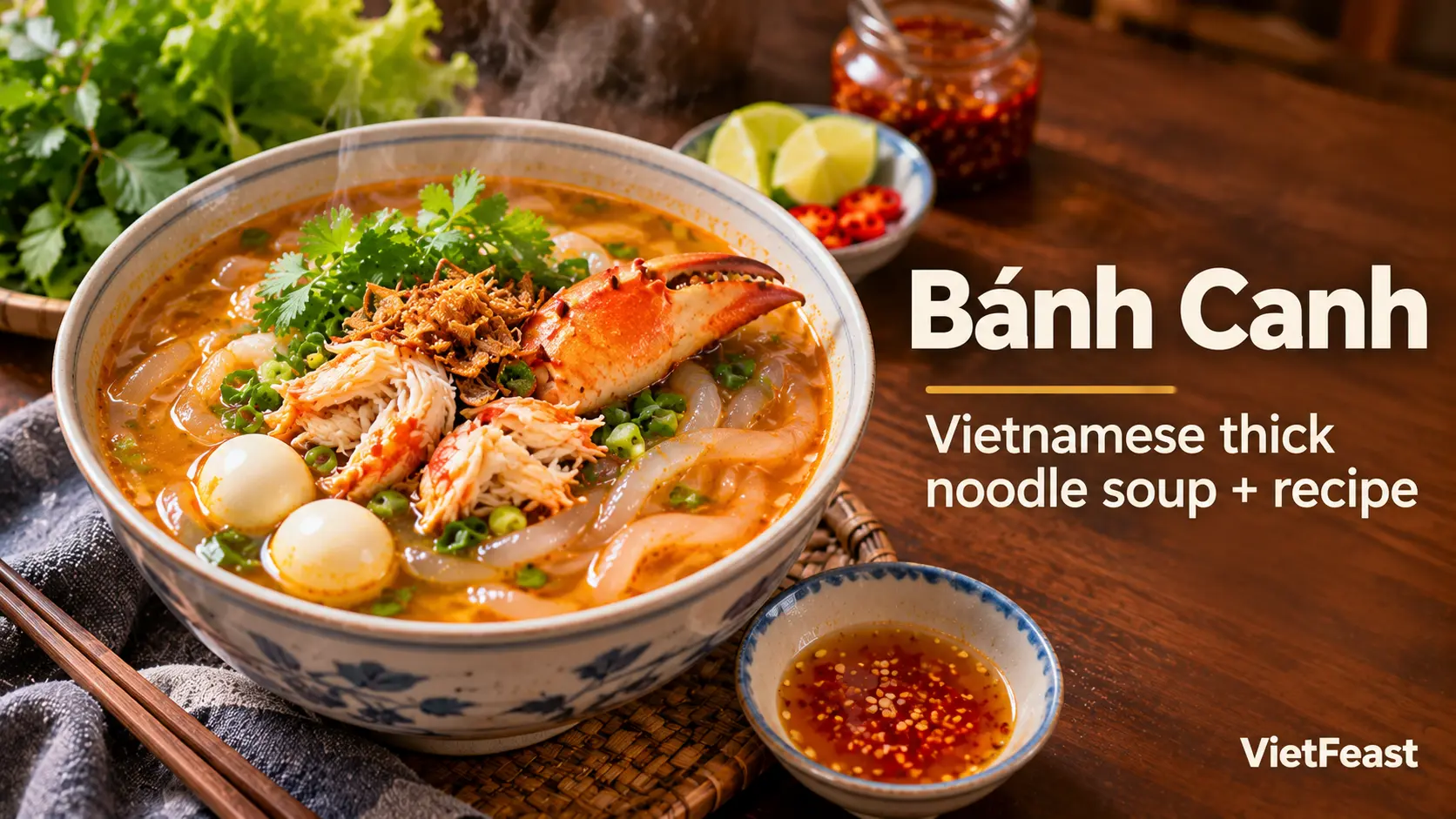
CrabCrab meat and often crab claws in a thick, rich, reddish broth, sometimes with quail eggs and pork blood.
Bánh canh giò heo
Pork hockA long-simmered pork-bone broth with slices of pork leg. Clearer and lighter.
Bánh canh cá lóc
Snakehead fishA clean fish broth, made in both southwestern and Huế styles.
Bánh canh chả cá
Fish cakeAssociated with coastal cities such as Phan Thiết and Nha Trang.
Bánh canh Trảng Bàng
Dry styleA dry version with minced meat, peanuts and fresh herbs, named for Trảng Bàng in Tây Ninh province.
Bánh canh vs. udon
They look alike, but udon is made from wheat flour, while bánh canh noodles are made from tapioca or rice and tapioca, so they’re more slippery and chewy. The broths are different too. Bánh canh uses Vietnamese pork, crab or fish broths with fish sauce, herbs and fried shallots.
How to cook packaged bánh canh noodles
- Fresh noodles: separate and rinse briefly, then boil for a few minutes until translucent and chewy. Follow the package.
- Dried noodles: boil according to the package, usually longer than fresh. Rinse to remove surface starch if you want a clearer broth.
- Cooking in the broth: many cooks boil fresh noodles directly in the soup so their starch thickens it.
Bánh canh giò heo recipe (pork hock)
Prep: 20 min · Cook: 1¾ hr · Total: About 2 hr · Makes: 4–6 bowls
For the broth
- 2 lb (900 g) pork hock, cut into rounds
- 1 lb (450 g) pork bones
- 3 quarts (2.8 L) water, plus more for parboiling
- 1 yellow onion, halved
- 2 tbsp dried shrimp (optional)
- 3 tbsp fish sauce
- 1 tbsp rock sugar or sugar
- 1 tsp salt
For the bowls
- 1½–2 lb (680–900 g) fresh or packaged bánh canh noodles
- 4 scallions, sliced
- Cilantro, chopped
- Fried shallots
- Black pepper
- Lime wedges and sliced chili
Instructions
Parboil
Boil the pork hock and bones for 5 minutes, then drain, rinse and clean the pot.
Simmer the broth
Return the pork to the pot with 3 quarts of water, the onion and dried shrimp. Simmer gently for 1½ hours, skimming, until the hock is tender.
Season
Remove the onion. Season with fish sauce, sugar and salt to taste.
Cook the noodles
Cook the bánh canh noodles according to the package, or boil fresh noodles directly in the broth for a few minutes so their starch lightly thickens the soup.
Serve
Divide the noodles and pork hock among bowls, ladle in the hot broth, and top with scallions, cilantro, fried shallots and pepper. Serve with lime and chili.
More to explore
Bánh canh also appears in our best soups for a cold day. See how it fits into regional cooking in Vietnamese food by region, or find a bowl nearby on our bánh canh page.
Frequently asked questions
What is bánh canh?
Bánh canh is a Vietnamese noodle soup made with thick, chewy noodles from tapioca flour or a rice-and-tapioca blend, served in pork, crab or fish broth.
What is bánh canh in English?
It’s usually described as Vietnamese thick noodle soup, and sometimes called “Vietnamese udon” because the noodles look similar.
Is bánh canh the same as udon?
No. Udon is made from wheat flour, while bánh canh noodles are made from tapioca or rice and tapioca, giving them a more slippery, chewy texture.
What is bánh canh cua?
Bánh canh cua is the crab version: thick noodles in a rich, slightly thick, reddish broth with crab meat, often with crab claws and quail eggs.
How do you cook packaged bánh canh noodles?
Follow the package. Fresh noodles usually need just a few minutes in boiling water or broth, while dried noodles need longer. Rinse them if you want a clearer broth.
Is bánh canh gluten-free?
The noodles are usually made from tapioca or rice flour, but some brands and broths may include wheat or other ingredients. Check the label and ask the restaurant if you need to avoid gluten.
- Various soups with the Vietnamese udon, Tuoi Tre News (noodle ingredients and varieties).
Want a bowl of bánh canh?
Find Vietnamese restaurants near you.