In this guide
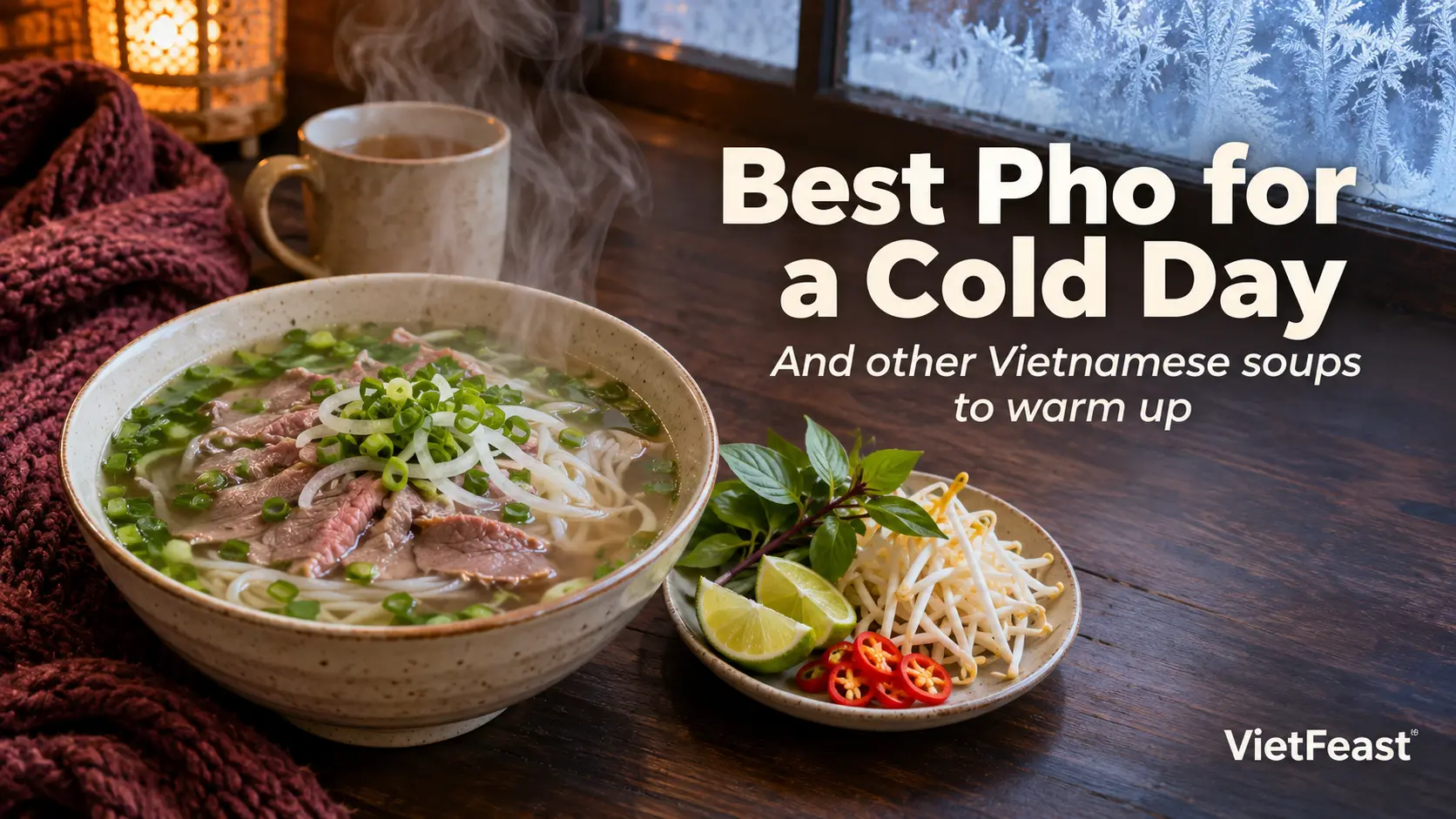
The best pho for a cold day is usually a classic beef pho (phở bò): a long-simmered, spiced beef broth poured steaming hot over soft rice noodles. Want more heat? Order bún bò Huế. Want something gentler? Go for chicken pho (phở gà) or a clear bowl of hủ tiếu.
Key takeaways
- Default pick: beef pho. It comes out hot and smells of warm spices, and you control the garnish.
- Craving heat: bún bò Huế, with lemongrass and chili.
- Craving something lighter: chicken pho or hủ tiếu.
- Craving something richer: bún riêu (tomato and crab) or bánh canh (thick, chewy noodles).
- Keep it hot: add herbs and bean sprouts a little at a time, not all at once.
Why pho is the go-to cold-weather bowl
Pho (phở, Vietnam’s best-known noodle soup) is what most people reach for when the temperature drops, and for good reason. If you’re new to it, start with our guide What Is Pho? and the pronunciation guide. On a cold day, three things make it work:
- It arrives very hot. The broth is ladled straight from the pot, hot enough that thin slices of rare beef cook right in the bowl.
- It smells warm. The broth is typically simmered with charred onion and ginger and spices such as star anise and cinnamon.
- You build it your way. Herbs, lime, chili and sauces on the side let you make each bowl brighter or spicier as you go.
Beef or chicken pho when it’s cold?
Beef pho tends to taste deeper and more spiced, so it’s the classic choice when you want something rich and filling. Chicken pho is usually lighter and cleaner, which suits a slower, quieter lunch. Neither is “right.” Pick the flavor you’re craving.
Our cold-day shortlist: 6 Vietnamese soups to order
Pho is the headliner, but these are worth knowing when you want a change. For the full breakdown of each noodle soup, see our guide to Vietnamese noodle soups.
1. Phở bò (beef pho)
Spiced beef broth, flat rice noodles and your choice of beef cuts. When you can’t decide, order this. Learn about pho.
2. Phở gà (chicken pho)
The same noodles in a clearer chicken broth. Good when you want warmth without heaviness.
3. Bún bò Huế (spicy beef noodle soup from Huế)
A lemongrass-forward broth with chili and fermented shrimp paste, served over thick round rice noodles. Pick it when you want a bowl with real kick. What Is Bun Bo Hue? · Bun bo Hue vs pho
4. Bún riêu (tomato and crab noodle soup)
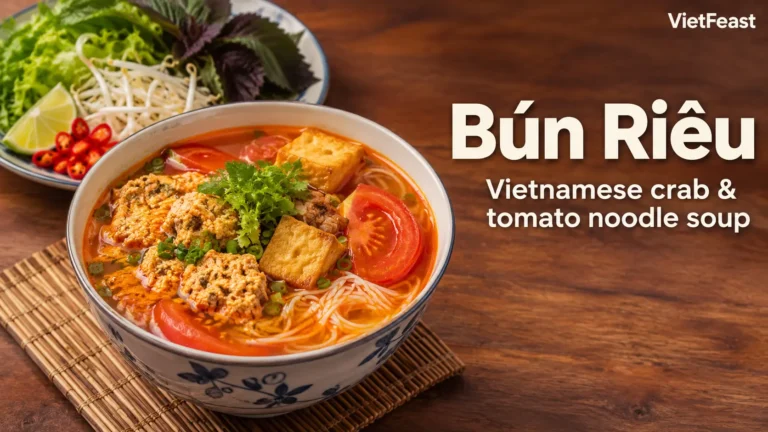
A tomato-based broth with crab, often with tofu, over rice vermicelli. Its tangy, savory flavor stands out on a gray day. Where to eat bún riêu.
5. Hủ tiếu (Southern-style noodle soup)
A clear, mild broth, often pork-based and slightly sweet, with a choice of noodles. Many places also serve it “dry” (khô) with the broth on the side. Where to eat hủ tiếu.
6. Bánh canh (thick noodle soup)
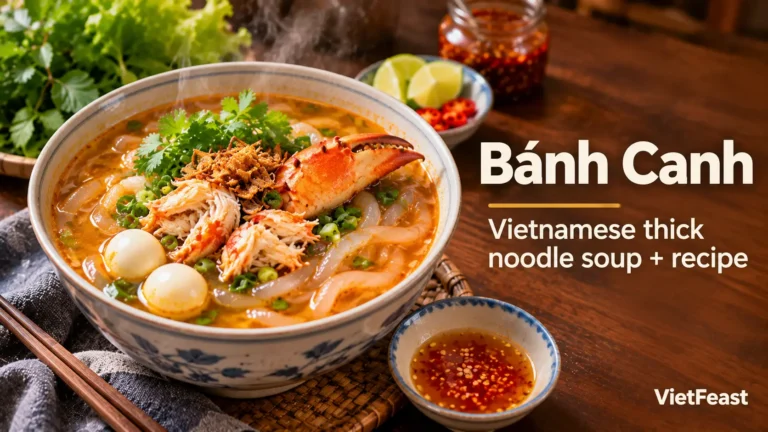
Chewy, thick noodles made with tapioca and/or rice flour in a thicker broth, often with crab or pork. It’s the most filling bowl on this list. Where to eat bánh canh.
Quick chooser: match the soup to your mood
| If you want… | Order | Why |
|---|---|---|
| Classic, reliable comfort | Phở bò | Spiced beef broth, served very hot |
| Something light | Phở gà or hủ tiếu | Clearer, milder broths |
| Heat | Bún bò Huế | Lemongrass and chili |
| Tangy and savory | Bún riêu | Tomato and crab broth |
| Maximum filling | Bánh canh | Thick, chewy noodles and a thicker broth |
| A shared meal with friends | Lẩu (Vietnamese hot pot), if it’s on the menu | A pot simmers at the table the whole meal |
Not in the mood for noodles?
Vietnamese cooking also has warming soups without noodles, such as cháo (rice porridge), canh (everyday home-style soups) and súp cua (crab soup). See our guide to Vietnamese soups beyond noodles. They show up on some restaurant menus, so it’s worth a look.
How to keep your bowl hot to the last spoonful
- Add garnishes gradually. A big pile of cold bean sprouts and herbs cools the broth fast. Add a handful, eat, and repeat.
- Eat the noodles first. They soak up broth and soften as they sit. Save the broth for the end.
- Ask about extra broth. If you like a soupier bowl, ask your server. Policies vary by restaurant.
- Pick the right size. Many pho shops offer more than one bowl size, so check the menu before you order.
- Add a hot drink. Many Vietnamese restaurants serve hot tea, and Vietnamese coffee comes hot (cà phê sữa nóng) as well as iced. See our Vietnamese coffee guide.
- Taking it home? Restaurants often pack broth separately from noodles. Reheat the broth until steaming and pour it over just before eating. See our Vietnamese food delivery guide for more tips.
New to ordering? Our guide on how to order at a Vietnamese restaurant covers the menu, condiments and etiquette.
Find a hot bowl near you
Use Best Pho Near Me to find pho close to you, or browse the best pho across the US by city. In bad weather, call ahead or check the listing to confirm hours before you head out.
Frequently asked questions
What is the best Vietnamese soup for a cold day?
For most people it’s beef pho (phở bò). The spiced beef broth is served very hot over rice noodles, and you adjust it with herbs, lime and chili. If you want spicier, try bún bò Huế. If you want lighter, try chicken pho or hủ tiếu.
Should I order beef or chicken pho when it’s cold out?
It comes down to taste. Beef pho is usually deeper and more spiced, and chicken pho is usually lighter and cleaner. Both are served hot. Pick the one that matches what you’re craving.
What Vietnamese soup can I order if I don’t eat beef?
Chicken pho (phở gà) is the easiest swap. Bún riêu (tomato and crab), hủ tiếu (often pork and seafood) and bánh canh (often crab or pork) are other options. Recipes vary by restaurant, so ask your server what’s in the broth and toppings, especially if you’re avoiding something for dietary or allergy reasons.
Are there Vietnamese soups without noodles?
Yes. Cháo (rice porridge), canh (home-style soups) and súp cua (crab soup) are all noodle-free. Availability depends on the restaurant, so check the menu or call ahead.
How do I keep pho from getting cold while I eat?
Add bean sprouts and herbs a little at a time instead of all at once, eat the noodles first, and save the broth for last. If you’re taking it home, keep the broth separate and reheat it until steaming before pouring it over the noodles.
Ready for a steaming bowl?
Find Vietnamese restaurants near you on VietFeast.